

Kansas City drummer Jaylen Ward has been building something quietly remarkable. One half of the Ward father-son rhythm section alongside bassist James Ward, Jaylen has shared stages with Bobby Watson, performed at the Super Bund festival in Shanghai, played the Valparaiso Jazz Festival in Chile, and represented Kansas City’s jazz legacy on an international stage as part of the American Jazz Museum’s delegation to the Edgar Snow International Symposium in Beijing.
He’s young. He’s traveled. And he’s paying attention – not just to the music, but to the architecture, the fashion, the food, the way different cultures hold space for art. We sat down with Jaylen to talk about what happens when a Kansas City musician takes the music out into the world and brings the world back home.
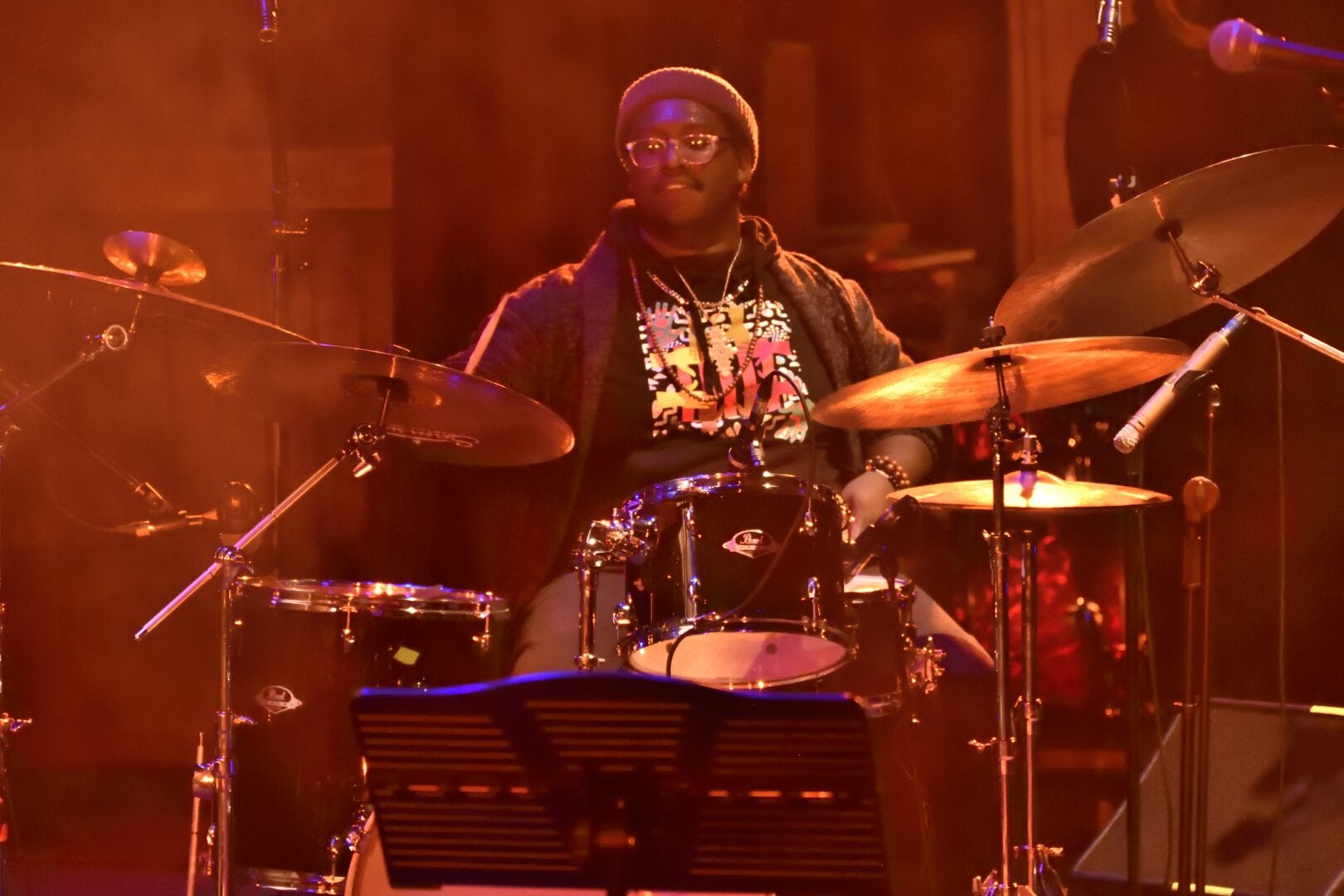
You’ve performed in multiple countries. How has playing for international audiences shaped your sound?
South American, Cuban, Afro-Cuban music has been a huge part of my musical upbringing. Artists like Ray Obiedo, Chiquito, Tito Puente, Changuito, and Carlos Santana have been huge influences on me. Playing for international audiences brings those influences full circle – you’re not just studying the music anymore, you’re inside it.
Is there a particular city or country that had a major impact on you creatively?
Chile was incredible. There was this great mixture of influences from different regions in South America – Peru, Bolivia, Argentina – all converging because of the geography. I was fortunate to meet so many musician friends and exchange knowledge of Chilean music.
And then Beijing. There’s the Forbidden City, this Royal Palace that’s thousands of years old. The infrastructure has very intricate symbolism built into the design of the temples. Every single line, every repeating pattern directly correlates to historical details – royal rankings, the role everyone has in the temple, spiritual animals associated with each royal family. The amount of detail is captivating. That kind of intentionality in design speaks to me as a musician.
What are the biggest differences you’ve noticed between audiences in the U.S. and audiences abroad?
The audience in other countries is a lot more interactive. The reason goes back to cultural significance. Jazz in America was conceived as sophisticated social music, especially after the 1950s, when it became “sit down and listen” music. Before that era, jazz was dance music. International audiences often still carry that older, more physical relationship with the music.
Can you share a moment from touring where you felt, “This is exactly why I do this”?
Sharing with other musicians is such an amazing experience. These are memories that can only be created with each other. Some of the greatest musicians I’ve ever met were from overseas. Every act at the Valparaiso Jazz Festival had a completely unique sound. That’s the thing about festivals – you’re not just performing, you’re absorbing.
How have the cultures and styles you’ve encountered influenced the projects you’re working on now?
It adds more colors to my palette. Having influences outside of jazz is what expands the human experience of being a musician. If you’re a rock musician, have more influences outside of rock. If you’re a jazz musician, have more influences outside of jazz. If you’re a country musician, have more influences outside of country. The broader your palette, the more honestly you can express what you’re hearing.
How do you prepare to collaborate with musicians from different cultural or musical traditions?
The same way I’d prepare to collaborate with anybody: listen. The more I listen and remind myself to be myself, the more music flows out of everyone. Music is a very unifying experience. It is the universal language of the world. That’s what makes traveling so beautiful.
Are there international artists who’ve significantly influenced your direction?
I’ve been great friends with Felipe Duhart, Felipe Canales, Daniela Conejero, Italo Aguilera, and Felipe Conejero for the past three years, ever since my mother Angela Ward’s first visit to South America for the Semanas Musicales Rhythm Between River & Lake Festival in Frutillar, Chile. We’ve been avid collaborators ever since.
How do the stories from your travels show up in your compositions?
I want to write more music about the experiences I’ve had in recent travels. I still feel like I’m processing. What I have been expressing is my love for modern Asian fashion and Chile’s modern street fashion. I really love the use of denim in Asian clothes, and the use of woven wool clothing in South America. I’d like to incorporate all of that into my compositions – the textures, the layering, the way different cultures approach material and form.
If you could choose one venue to return to for a dream performance, where would it be?
Blue Note Beijing, Jazz at Lincoln Center Shanghai, and the Municipal Theater of Valparaiso. I also want to visit Santiago – quite a few musicians from Santiago were in Valparaiso when I was there, and I’d love to see what’s happening in their home city.
What challenges have you faced touring internationally?
I only learned enough Spanish and Chinese to get by at grocery stores and basic situations. I had to always travel with someone who could speak both English and the native language. That’s a real limitation, and it makes you appreciate the people who bridge that gap for you.
How do you stay grounded while constantly moving between countries and time zones?
Eat less. It gets difficult when you want to try everything. At the same time, food in other countries is a lot more filling, so it’s actually easier to stay healthy traveling internationally than in the States. Jetlag, though – that’s another story. It wasn’t bad flying there, but coming back I had to sleep throughout the day and take as many naps as possible on the plane to maintain my sleep pattern.
Is there a festival or stage that pushed you creatively?
Anytime I’m sharing the stage with Bobby Watson, it’s not only an educational experience in music, but in life. I feel very privileged and grateful to have shared the stage with Bobby Watson at the Super Bund festival.
How has global exposure shaped your identity – not just as an artist, but as a person?
It’s given me a chance to see my influences not only in music, but in fashion, art, and social and political perspective. You come back different. You can’t unsee the world.
What advice would you give young musicians who dream of taking their music international?
Absorb every aspect of art from other countries – visual art, architecture, sculpting, music, literature, languages, the cultural significance of historical events. This will shape you into a unique musician. It’s also equally important to gravitate toward the cultures you connect with most, and to study the culture of your own heritage as deeply as possible. Then find the correlations between them. That’s where your voice lives.
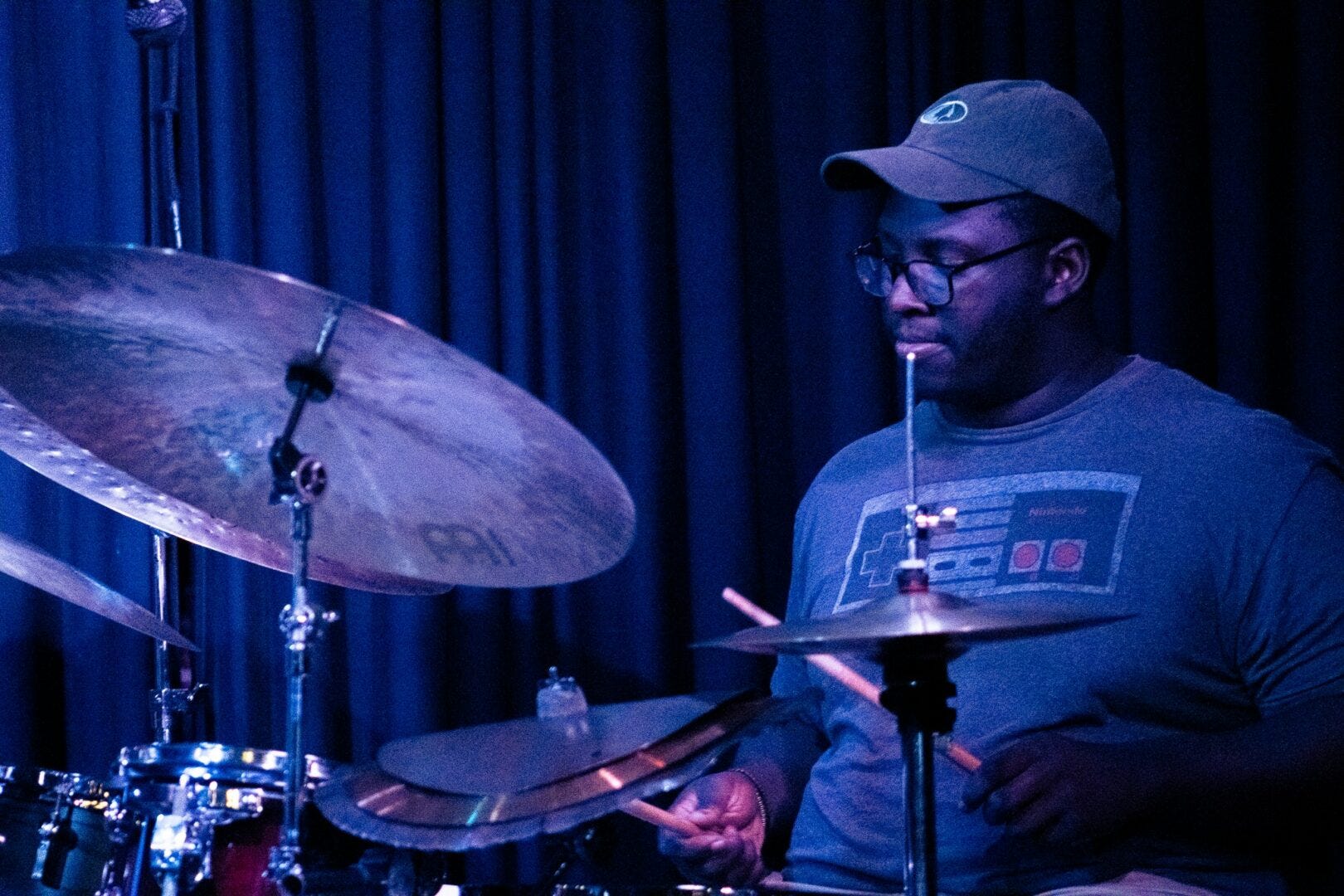
Jaylen Ward is a Kansas City-based drummer and member of the Ward family rhythm section. He has performed internationally with Bobby Watson, Charles Williams, and James Ward as part of the American Jazz Museum’s cultural exchange programs. Follow the American Jazz Museum for more artist stories and conversations at americanjazzmuseum.org.